

Sharing our insights
We investigate failures, analyze root causes, and share practical lessons from real-world cases — from structural issues and material breakdowns to safety hazards and system malfunctions.


Whether you're a claims professional, attorney, or simply curious about how and why failures occur, we invite you to explore the collection. Dive into topics that interest you and discover valuable forensic insights.

Recent Posts
With contributions from EDT experts across the country, our articles cover a wide range of disciplines and case types. Use the filters to quickly pinpoint topics of interest, or browse broadly to discover new insights and trends in forensic engineering.
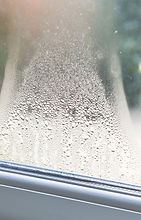

Stay Dry, My Friends – Avoid Condensation in Your Building
Condensation inside walls and roofs can cause serious damage even without leaks. Nicholas K. Pontillo, P.E. explains how warm, moist air creates hidden moisture problems in buildings and shares real-world examples of roof failures, wood decay, and biological growth — along with practical steps to prevent them through proper design and maintenance.


Birds Did This?
Circular damage on a roof isn’t always hail. Cody E. Tarbell, P.E. shows how bird droppings — containing damaging uric acid — create ring-shaped patterns that are often misidentified as hail on modified bitumen and asphalt roofs. This article provides clear distinctions and real-world examples to help accurately determine the cause of damage.


Refrigeration Simplified
David S. Williams, P.E. breaks down how refrigeration works using simple analogies. From the cooling effect of depressurizing a propane tank to the heat generated by an air compressor, this article explains the basic refrigeration cycle — compression, heat rejection, expansion, and heat absorption — in an easy-to-understand way.


Residential Renovation: Design & Construction Defects
A well-intentioned renovation of a 1950s home led to severe floor decay and fungal growth within two years. Jeffrey W. Pitzer, P.E. explains how sealed crawl space ventilation, improper grading, and water intrusion through beam pockets created the perfect environment for biological damage — highlighting common pitfalls in residential renovation projects.


HVAC: Saying Goodbye to HCFC-22 (R-22) Refrigerant
Richard L. Ellsworth, P.E. explains why many R-22 HVAC systems can no longer be repaired when the compressor fails. This article covers the EPA phase-out timeline under the Montreal Protocol, the 2030 full ban on R-22 equipment, and the shift to newer, higher-pressure refrigerants like R-410A that often require full system replacement.


Assessment of the Effects of Hail to Metal Roof Panels – One Step Further
Not all hail dents on metal roofs require replacement. Kevin L. Kirchmer, P.E. explains how to differentiate cosmetic damage from functional damage and demonstrates a field water test to check whether dents at side seams have compromised the sealant. This practical approach helps determine if a metal roof has truly been functionally damaged or if the dents are only cosmetic.


Gas Turbines - A Brief History Lesson
Timothy B. Hatch, P.E. provides a clear introduction to gas turbines by comparing them to everyday reciprocating engines. This article explains the continuous combustion process — compression, combustion, and expansion through turbine blades — and traces the early history from the first industrial gas turbine in 1932 to the jet engines of World War II.


Barge Foundering
Steven M. Lindholm, P.E. examines why a secured dredging barge capsized during a storm. Stronger winds on the lattice boom crane heeled the barge enough for swell to enter an open compartment hatch, leading to progressive flooding and foundering. This marine forensics case illustrates how windage, securing practices, and minor oversights can result in total loss.

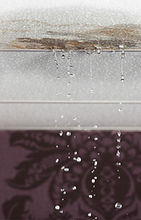
It’s Raining Inside My Building!
Kurt D. Mulder, P.E. shows why water appearing inside a building during rain isn’t always a roof leak. In this case, damaged vinyl-faced insulation in a pre-engineered metal building allowed warm interior air to condense on cold exterior panels, creating the appearance of leaks. Proper diagnosis prevented unnecessary roof replacement.


Static Ignition of Gasoline
Richard T. Edwards, P.E. examines how static electricity from a person’s clothing and movement ignited gasoline vapors at a pump. Testing showed the charge built up when the driver slid across synthetic car seats without touching metal. This article explains the conditions that led to ignition and provides practical steps to prevent static-related fires during refueling.


Brick Veneer – Defined in the Code
Glenn Stewart, P.E. provides clear definitions from the International Building Code for terms commonly used with brick veneer systems. This article explains exterior wall envelope, veneer, water-resistive barrier, flashing, and related components to help accurately assess performance issues and water intrusion in brick-clad buildings.


Plasma Cutting Machine Explosion
Michael W. Dickenson, P.E. examines the explosion of a CNC plasma cutting machine caused by hydrogen gas buildup. Metal debris in the water sump oxidized and produced hydrogen, which accumulated due to poor maintenance. When combined with a leaking oxygen supply and ignited by the plasma process, the result was a powerful explosion. A clear example of how maintenance failures can lead to catastrophic industrial incidents.
