

Sharing our insights
We investigate failures, analyze root causes, and share practical lessons from real-world cases — from structural issues and material breakdowns to safety hazards and system malfunctions.


Whether you're a claims professional, attorney, or simply curious about how and why failures occur, we invite you to explore the collection. Dive into topics that interest you and discover valuable forensic insights.

Recent Posts
With contributions from EDT experts across the country, our articles cover a wide range of disciplines and case types. Use the filters to quickly pinpoint topics of interest, or browse broadly to discover new insights and trends in forensic engineering.


Noodle Boards and the Rising Risk of Kitchen Fires
That decorative wooden board covering the stovetop may be more than décor at a fire scene. Patrick Earley, IAAI-CFI(V), NFPA-CFPS, explains why a kitchen fire involving a noodle board isn't automatically the homeowner's fault, and what investigators and claims professionals should check before blaming the range.

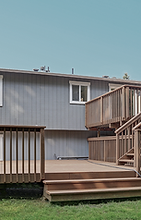
Elevated Decks
Tristan Burm, P.E., with Nick Pontillo, P.E., explain why most deck collapses start at the hidden ledger connection. Trapped moisture decays framing and corrodes fasteners, and existing decks must be kept structurally sound.


When Medical Implants Fail: A Forensic Engineer’s View
When a medical implant works as intended, it can be life-changing. A hip that allows someone to walk pain-free again. A shoulder that lets them lift a grandchild. But when an implant fails, the story changes to pain, repeat surgeries, and sometimes years spent in a courtroom. That’s where failure...


Polymers Under Pressure: Why Plastics Fail More Often Than People Think
Plastics are everywhere now. They’ve replaced metals, wood, and a long list of other materials over the last couple of decades. The shift makes sense because polymers are light, inexpensive, and easy to shape. But they also fail more often than people expect; and when they do, the problem usually...

Overhead Door Failure Investigation: How a Simple Installation Mistake Nearly Caused a Serious Warehouse Accident
When you work in facilities that depend on large mechanical systems, even minor installation errors can lead to major safety risks. In one recent case I investigated, a missing bolt on a warehouse overhead door nearly caused a serious injury. What Happened: A Forklift Operator, a Stuck Door, and a...

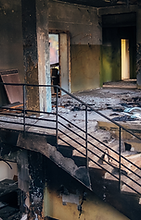
When Fire Doesn’t Mean Failure: How Forensic Engineers Determine Survivability
“Total loss” isn’t a diagnosis—it’s a conclusion. In fire claims, I’m often asked to determine whether a building or system truly failed, or whether it can be safely repaired and returned to service. That determination hinges on survivability: did the structure or component experience heat, flame...


Generator Fires: Beyond Carbon Monoxide Risks
When most people think of generator hazards, carbon monoxide poisoning is the first concern. And for good reason. Improper use in enclosed spaces has caused countless tragedies. But as a forensic engineer, I’m often called when something more tangible and destructive has occurred: fire. Generators...


When Rain Turns to Flood: Identifying External Causes with Forensic Expertise
Forensic Engineering Perspectives on Urban Flooding and Public Systems When a home or business floods during a rain event, the cause may be found inside or outside of the property line. While privately owned drainage elements such as French drains and sewer laterals are common culprits, this blog...


Why Towers Fall: An Engineer’s Perspective
Prior to my career as a Consulting Engineer at EDT, I worked for over a decade in the telecommunications industry where I performed structural engineering work and inspections services. In this role, I traveled all over the country and worked on thousands of cellular and broadcast towers which gave...


When Sprinklers Cause the Flood: What Really Happens When Fire Suppression Systems Fail
When people picture a sprinkler system activating, they imagine it saving property from a fire. What they don’t imagine is coming home from the holidays to find a ceiling collapsed and water pouring through the floor, courtesy of the sprinkler system itself. But that’s exactly what happened...
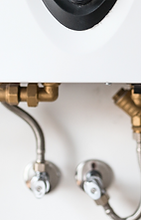
When Hydronic Heat Stops Circulating: A Residential HVAC Failure Investigation
When a homeowner loses heat in the middle of winter, the problem can sometimes escalate beyond inconvenience, and it can even be catastrophic. I previously investigated a case in the New England area where a frozen hydronic heating system led to extensive water damage throughout a rental home. The...
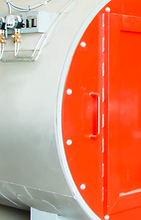
When Water Treatment Goes Wrong: A Commercial HVAC Investigation
In commercial buildings, HVAC systems are often complex networks of boilers, valves, and chemical treatment systems that have to work in perfect balance. When even one small component fails, the effects can ripple throughout an entire facility. I was called to investigate an incident at a hospital...