

Sharing our insights
We investigate failures, analyze root causes, and share practical lessons from real-world cases — from structural issues and material breakdowns to safety hazards and system malfunctions.


Whether you're a claims professional, attorney, or simply curious about how and why failures occur, we invite you to explore the collection. Dive into topics that interest you and discover valuable forensic insights.

Recent Posts
With contributions from EDT experts across the country, our articles cover a wide range of disciplines and case types. Use the filters to quickly pinpoint topics of interest, or browse broadly to discover new insights and trends in forensic engineering.
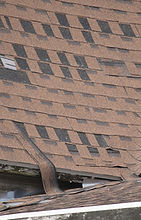

Unsealed Shingle Corners
Kurt D. Mulder, P.E. explains how diagonal rows of unsealed shingle corners commonly develop on aging asphalt roofs. Thermal cycling causes the shorter sections of the adhesive bonding strip to detach permanently — creating liftable corners that can be mistaken for wind uplift but are actually normal wear and tear with important implications for roof damage assessments.


Equal Conveyance and Compensatory Storage
Anthony P. Centurelli, P.E. examines equal conveyance and compensatory storage in floodplains through a real case involving a decades-old parking lot extension. The article explains FEMA’s strict “no-rise” requirements and why minor volume changes in large floodplains typically meet regulatory standards.


TPO Roofing Splits
When linear micro-splits appear in TPO roofing, are they from hail or material aging? Kurt D. Mulder, P.E. uses laboratory analysis to show how thermal cycling and UV degradation caused these lengthwise splits along the roll direction in a 16-year-old membrane — not hailstone impacts. This distinction is critical for accurate thermoplastic roof damage assessments.

Large Tractor Fire
Heavy equipment fire investigations carry significant safety risks. Michael W. Dickenson, P.E., CFEI, CVFI details hazards encountered during a large tractor fire examination — including energized batteries, confined spaces, puncture hazards, and moving machinery in tow yards — and stresses the importance of proper training and preparation for safe, thorough investigations.


Little Black Box - Big Data
Many vehicles contain a “black box” that records critical crash data. Kenny A. McClure, P.E., CFEI explains how these Event Data Recorders capture pre-crash information such as speed, braking, and steering input, and why the data is often decisive in determining what happened during a collision.


Is Transformer Gassing Damage?
When dissolved gases appear in transformer oil, is the unit damaged? Scott S. Cramer, P.E. explains how the Key Gas Method and IEEE condition levels help interpret results, why some gassing is normal, and when further testing is required to determine if insulation has been compromised or failure is imminent.


Does this Balcony Guard Meet Code?
Balcony guard code compliance questions often arise after falls or during renovations. Glenn Stewart, M.E., P.E. explains 2018 International Building Code requirements for guard height, opening size, structural strength, and when guards are required, offering practical guidance for evaluating existing installations in liability and construction claims.


Is That Truck Driver Safe?
When investigating truck crashes, determining whether the driver was compliant with hours-of-service rules is often critical. G. Wayne Maltry, P.E. explains the main FMCSA regulations — including the 11/14-hour limits, required breaks, weekly caps, and restart provisions — and offers a simple way to remember the core requirements for driver alertness.


A Balancing Act Parts 1 & 2 - Vibration Analysis of Machinery and Structures
Steven M. Lindholm, P.E. explains how vibration analysis diagnoses two common issues: rotational imbalance in machinery, which leads to bearing and shaft failures, and structural resonance, where wind or equipment loads excite a structure’s natural frequencies. Frequency analysis helps identify root causes and guide effective corrections in industrial and building systems.


Oxford Dining Hall Beam
Anthony P. Centurelli, P.E. shares the story of New College, Oxford and its supposed 500-year oak tree planting plan for dining hall beams. While largely a myth, the tale illustrates the power of long-term thinking in construction. This article links the story to the Critical Path Method and the importance of proactive planning on today’s projects.

Paper Production
Thomas D. Traubert, P.E. walks through the Kraft Process used to manufacture paper. From wood chipping and chemical digestion to pulp formation and the black liquor recovery cycle, this article explains how raw timber is transformed into finished paper and introduces the equipment involved in a typical pulp and paper mill.


Gensets
When backup power fails, the consequences can be serious. Chris S. Spies, P.E. explains how generator sets (gensets) work, the differences between stationary and mobile units, common applications from hospitals to disaster response, and why proper maintenance and adherence to NFPA standards are essential to avoiding costly failures.
